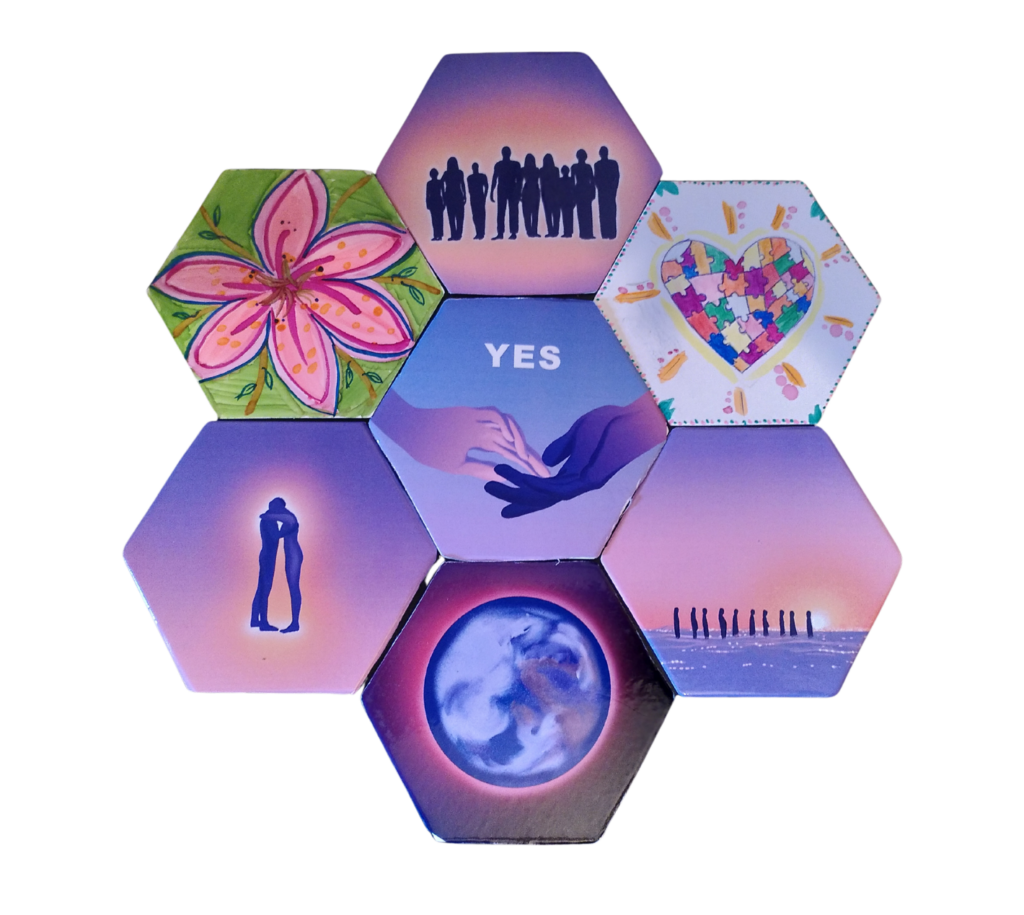
It all begins with a meeting with Solidarités Jeunesses, a popular education movement that aims to work in depth on issues of SGBV (sexual and gender-based violence).
Armed with knowledge and competences, Solidarités Jeunesses decides to take concrete action to further develop their community project for « a fair, peaceful and human-solidarity based society; {to fight} against all types of violence, exploitation and unfairness; and against networks of ideological, sexist, political, cultural and economic oppression. » (Excerpt from the preamble to the international constitution of Youth for Peace).
The organisation then sets up a European project and is granted fundings from Erasmus+ for the GiveLab project.
A team of facilitators and trainers is organised to work along on the project. Marine Pansu joins the team in October 2022 in Liège.
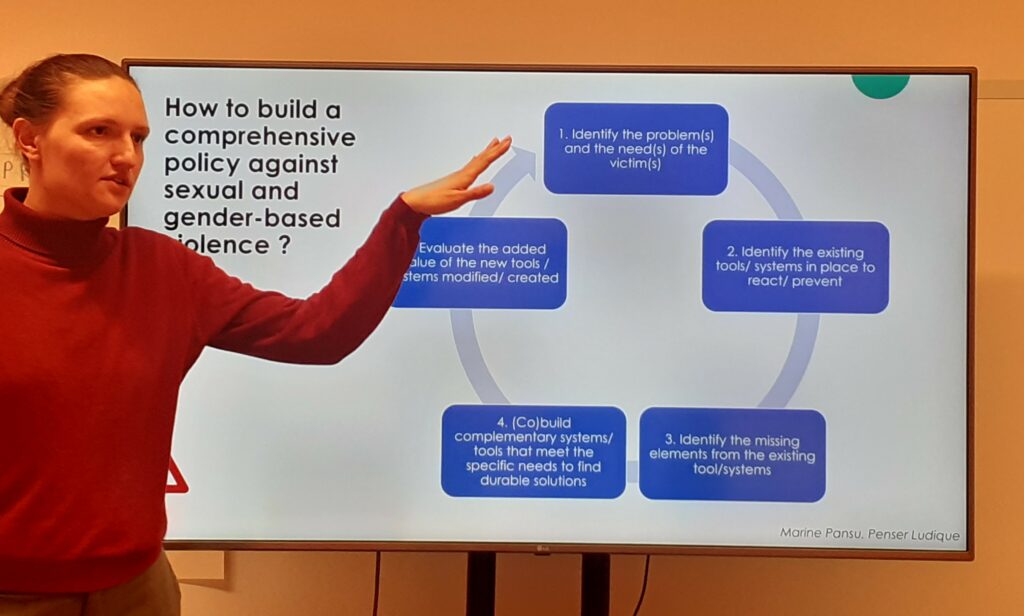
There she takes part in an interactive conference on SGBV in the European Union and a participatory workshop on how to create a comprehensive internal policy to combat them.
The project continues with the sharing of tools and practical experiences between partners : Solidarités Jeunesses (France), Association des Compagnons Bâtisseurs (Belgium), Coordinadora d’Organitzadors de Camps de Treball Internacionals de Catalunya (Spain), Associazione Link APS (Italy), Asociación Las Niñas del Tul (Spain), Grenzenlos – Interkultureller Austausch (Austria), Lunaria Associazione di Promozione Sociale (Italy), Active Rainbow (Latvia), Association Concordia (France) et Gönüllü Hizmetler Derneği (Turkey).
A toolbox is created with the existing tools.
But the partners start wondering: Will this be enough? The answer is no. They then decide to produce a bespoke game that will meet all the common needs they’d identified while developing the project.
The partners ask ALM-Formation to come back with its pedagogical design team to develop what will become Care to Tell? ©.
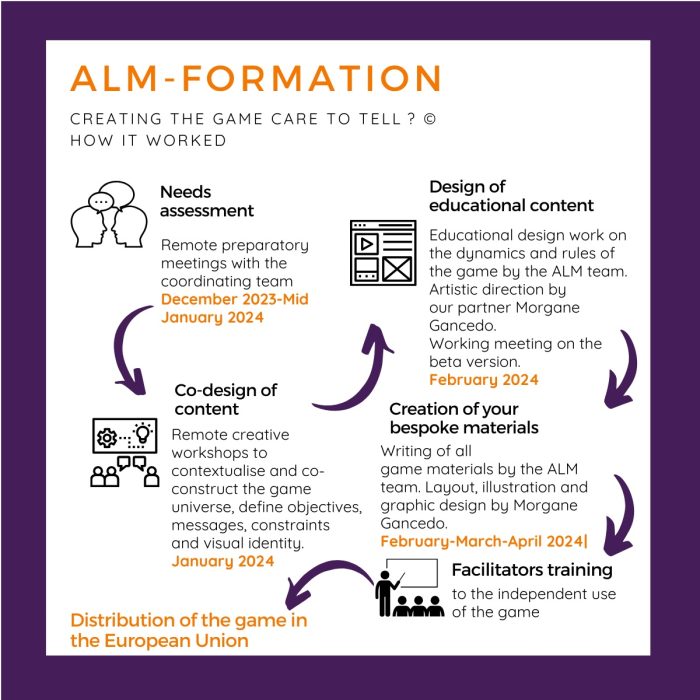
Following the training of around twenty facilitators, the game, which is funded by the Erasmus+ programme, is made available free of charge for reuse for non-commercial purposes via a Creative Commons licence.
To play the game, simply download it and copy-paste the following text when using it: Care To Tell? © 2024 by GiveLab project, Marine Pansu, Laurence Auger-Moss (ALM-Formation), Morgane Gancedo (artistic director) co-funded by the Erasmus+ program and coordinated by Solidarités Jeunesses with its 10 international partners is licensed under CC BY-NC 4.0
Care to Tell ? © is the first free SGBV game worldwide .
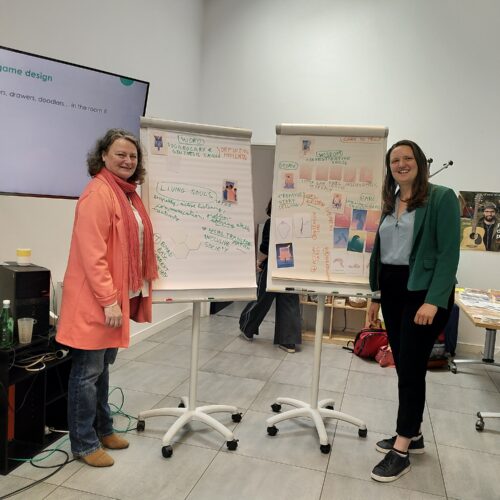
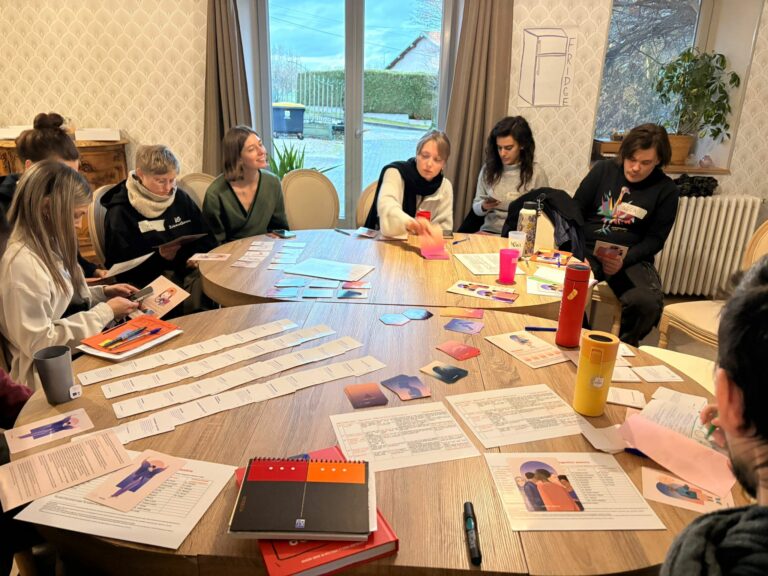
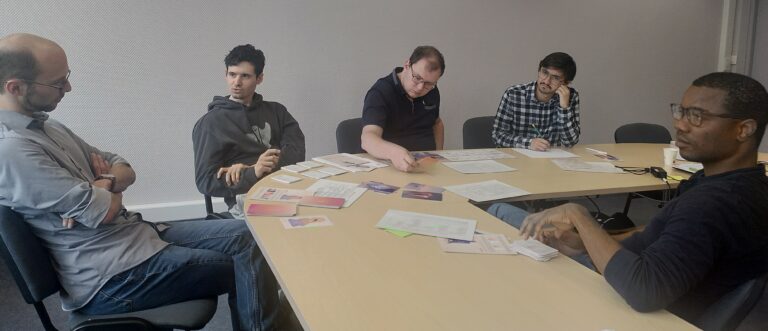
The pedagogical designers of Care to Tell ? © at a facilitators training in Paris in April 2024, which gathered about twenty people.
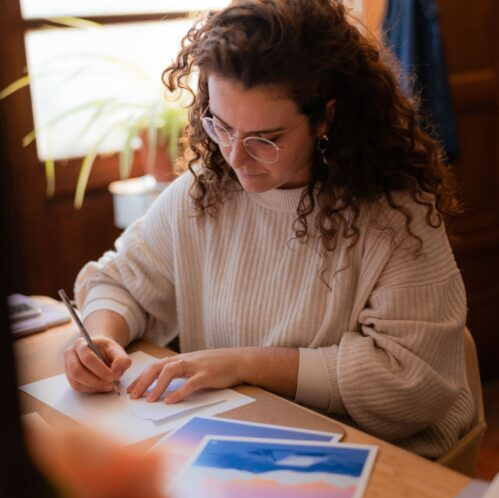
Morgane Gancedo Artistic director
Care to Tell ? © was created using a co-construction methodology based on European collective intelligence, with a multidisciplinary approach. The inspirations are diverse and varied, reflecting the diversity of the population and the approaches to dealing with violence.
How does it work?
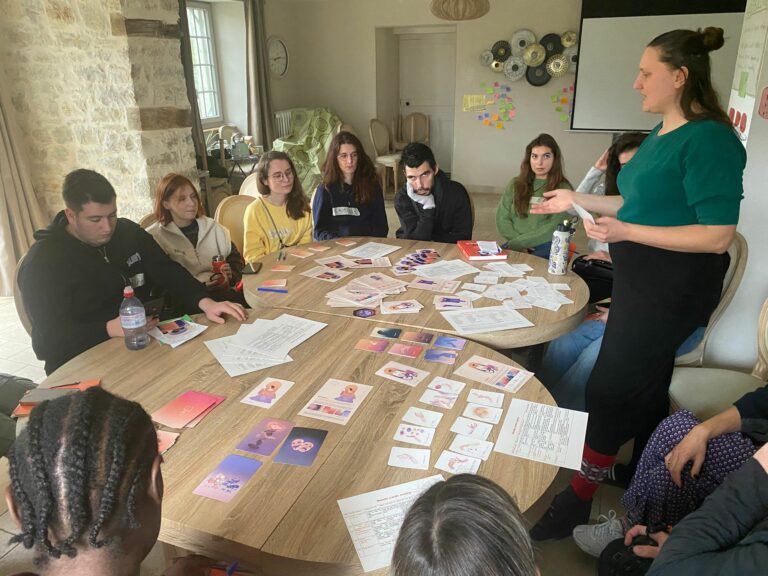
A trained facilitator takes charge of the first round of the game to allow players to familiarize themselves with it. To prepare for facilitation, the game rules booklet includes a facilitation guide. The game starts with first establishing a group dynamic that encourages discussion and enables players feel confident. The facilitator explains the rules and stays present throughout the game as a ‘living rulebook’.
Care to Tell ? © is a collaborative role-playing game. The players have to first discover their roles.
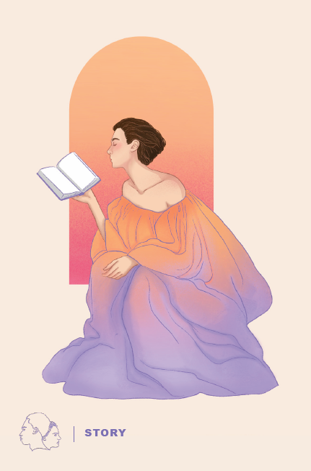
Each round begins with a story told by the character Story.
Inspired by photolanguage illustrations depicting SGBV actions and intentions in a vivid yet visually gentle manner, Story ends her story with an open-ended question.
The goal of each round is to respond to Story’s story.
Here are some examples of questions asked since 2024 :
– How can we prevent more Leilas from dying? (story about control and femicide)
– How would you resolve John’s situation? (story about isolation, depression, addictive behaviour)
– How can the teaching team intervene in this situation? (online harassment of a high school girl following the publication of nude photos by her boyfriend)
– What could I have said to my brother who made fun of me and prevented me from playing “boys” games’? (story of gendered sexist behaviour in childhood)
In the questions asked by Story, many topics were addressed, such as anorexia, transgender identity, one’s relationshio with oneself and one’s body, homosexuality, domestic violence, and heterosexual relationships.
Four characters collborate to answer Story’s question.
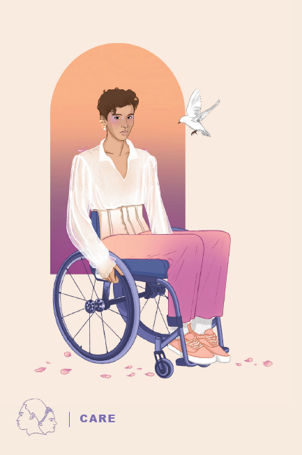
Care looks after all the players during the game using his Emotions and needs cards.
This role allows you to develop em-pathy, emotional intelligence and care.
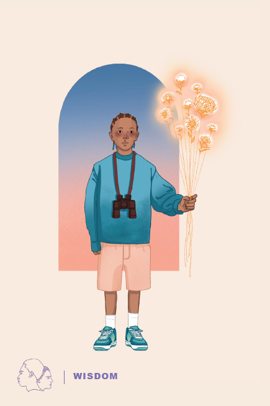
Wisdom provides assistance with the available resources: legislation (European), institutions/organisations, human resources, quotes and methodologies.
This role involves learning multi-disciplinary technical knowledge to empower players.
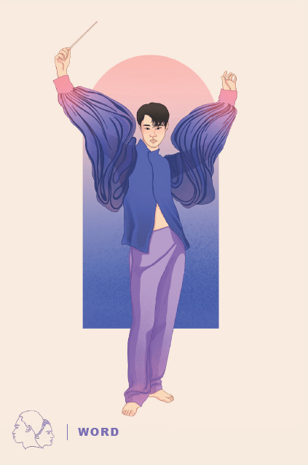
Word ensures all the players understand the vocabulary.
Using vocabulary cards with simplified definitions, Word helps to put words to what is being discussed.
This role, inspired by psychology, allows issues to be named so that they can be dealt with collectively.
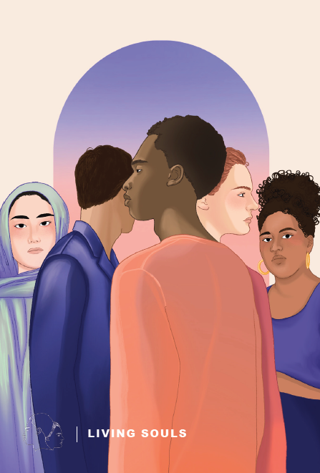
The Living Souls answer Story’s question.
This role allows participants to practise freedom of speech, critical thinking, active listening, divergent thinking and debate.
When each and everyone has understood and prepared for their role, so the game begins !
Each round allows players to answer a new question.
Players analyse the situation presented, question individual and social causes and the dynamics at work, and always find possible solutions to propose.
Perspectives, experiences and cultures intersect among players from Thailand, Peru, Mexico, Japan, Belarus, Russia, Ukraine, Greece, Serbia, North Macedonia, Germany, Spain, Turkey, Ivory Coast, Tanzania, Brazil, Belgium, France, Italy and more.
Each round of Care to Tell? © breaks the silence on issues of violence and teaches the group to communicate constructively in order to collectively address the violence inherent in our society.
For example, to prevent further femicides such as Leila’s, players suggested challenging jokes and other violent comments about women in conversations between men.
Or in the example of John, who isolates in his depression and addiction to social media, the players suggested that he rediscover meaning in his life by pursuing his childhood dreams (painting), gradually returning to group sports activities, going to therapy, or even altering his algorithm or use of social media to limit it.
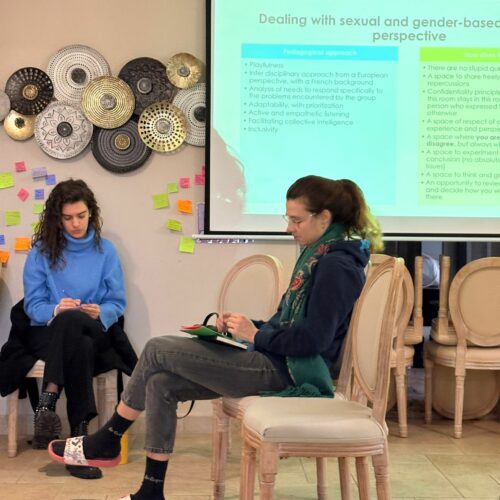
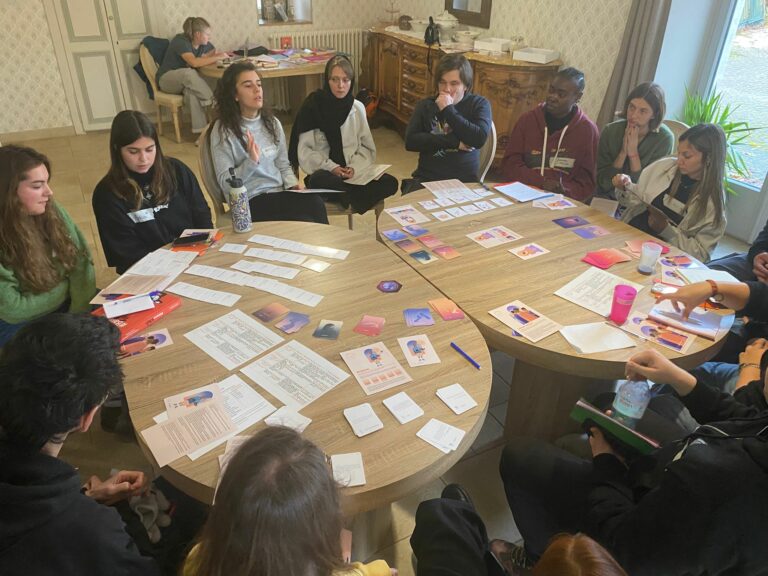
Around twenty games were played over a year and a half with a varied audience (teams of international and European volunteers, employees and volunteers from the Solidarités Jeunesses association in Essonne, Hautes-Alpes, Haute-Saône and Paris, doctoral students from the MADIS graduate school in Lille and the Institut Polytechnique de Paris, a professional network of artists and youth workers, and even the ALM Formation team ! )
Each round ends with the completion of the game board depicting visions of potentially inclusive societies. The more we play, the more the visions proposed by the creative team and/or drawn by the players overlap. The discriminatory and violent society gradually disappears, giving way to a society where constructive, inclusive and intercultural communication prevails.
With joy
And « in a modern way of learning« , as highlighted by a player.
Your turn to play !
Feedback from players
« The game is very engaging and carefully ensures that the discussion runs smoothly« .
« A caring and peaceful atmosphere where we can trust others enough to discuss sensitive topics, with rich discussions (despite our lack of expertise) »
« The facilitator was excellent, taking great care to create a comfortable atmosphere, and infusing the presentation with a great deal of humanity. »